Rajasthan by Road: 2,500 KM Across the Land of Maharajas
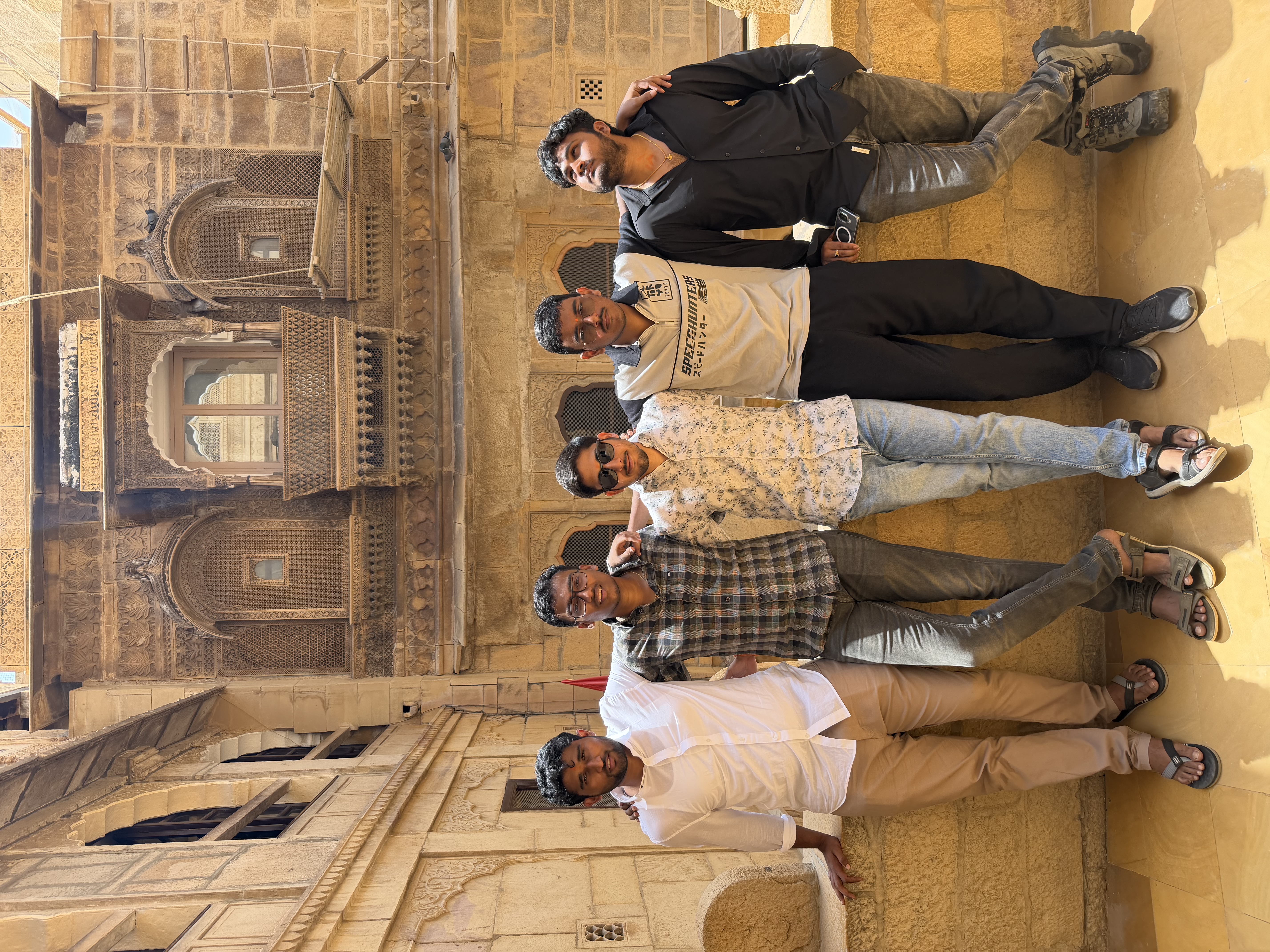
Five friends. One Brezza. Around 2,500 kilometres. Three very different cities. Countless forts, palaces, lakes and havelis — and a surprisingly large number of cows standing in the middle of highways.
This was our Rajasthan road trip.
We started from Chandigarh and drove through Jaipur, Udaipur and Jaisalmer, before making the long journey back home. We spent roughly 40 hours driving across the entire trip, averaging around 11 km/l in our Brezza. Fuel cost us approximately ₹22,000, with another ₹2,500 going toward tolls.
But the numbers don't really tell the story.
The real story was everything that happened between those 2,500 kilometres.
20th August Night — Chandigarh to Jaipur
Three of us — Tejeswar, Pranay and Vignesh — started from Chandigarh in the evening, heading straight toward Jaipur.
The plan was ambitious, but we had enough enthusiasm to make questionable decisions about sleep.
Our First Police Stop
The first police encounter happened while we were still on the way to Jaipur — somewhere after crossing into Rajasthan from Chandigarh.
I was sitting in the co-driver seat, working on my laptop. The driver was wearing his seatbelt. One of the others was too. I wasn't.
The police stopped us and we had a brief discussion. They let us go after pointing out that I shouldn't have been travelling without a seatbelt. First lesson of the trip: wear the seatbelt, always.
We eventually reached Jaipur around 3 AM on 21st August. At that point, sightseeing was obviously not happening. We slept, woke up later, and somehow even managed to fit work from the hotel into the trip. Because apparently a Rajasthan road trip doesn't exempt you from work.
Later that evening, before heading out, we went to the Sun Temple at Galta Hill at around 5 PM — just the three of us at that point. The temple is listed among Rajasthan's protected monuments and sits quietly in the Aravalli Hills.
After the Sun Temple, we headed to the airport to pick up Shanmukh — our fourth friend flying in. And that's where our second police encounter happened.
Second Police Stop: The Wrong U-Turn
Google Maps showed a U-turn near the airport. We followed it. The police stopped us and told us it wasn't the correct place to make a U-turn. They took ₹1,000 from us. Two police encounters before we'd even seen a single fort.
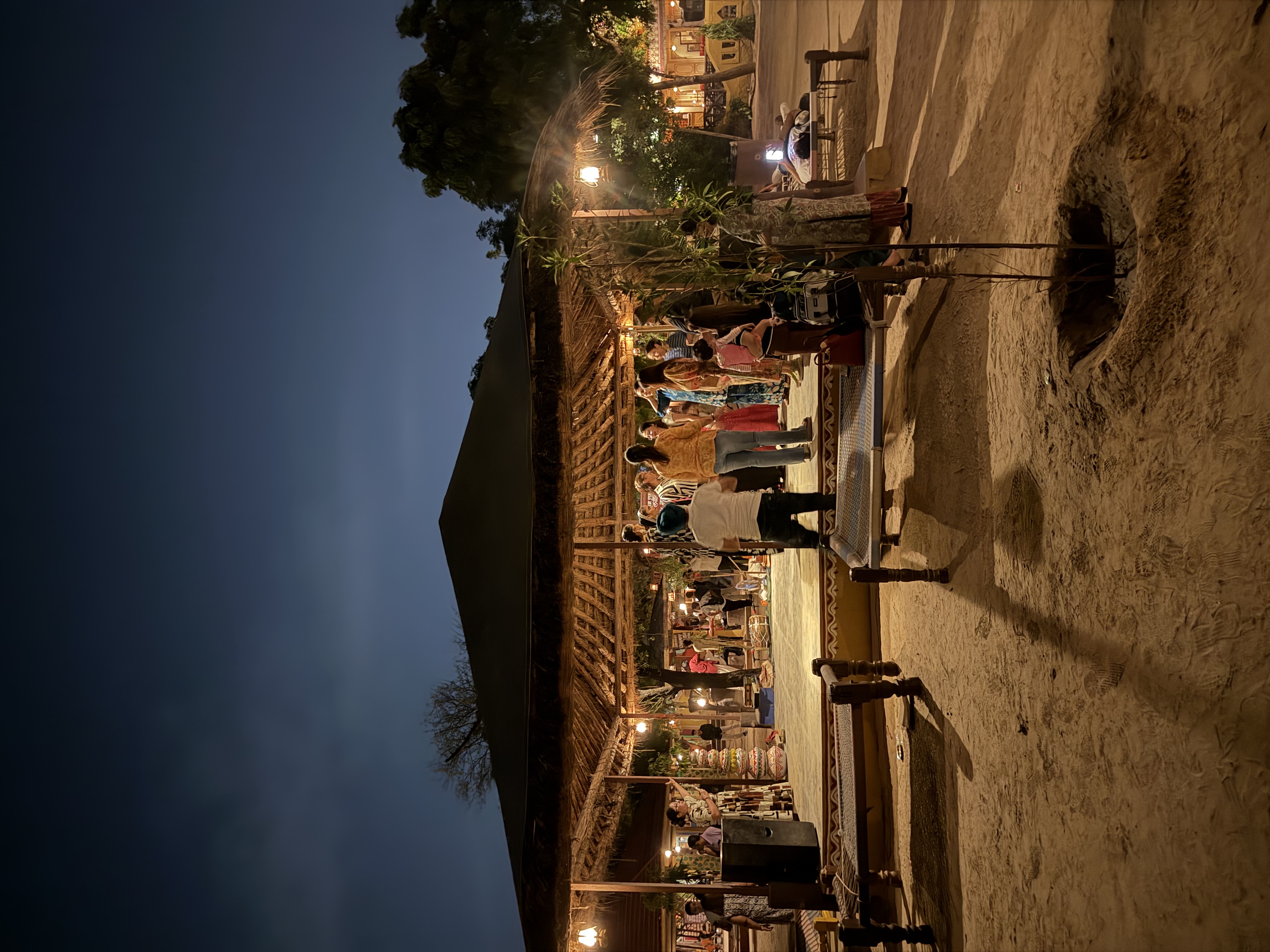
Chokhi Dhani
That night, with Shanmukh now with us, all four of us headed to Chokhi Dhani — our first proper taste of Rajasthani culture. After hours on the road, a police stop, working from the hotel, and picking someone up from the airport, it finally felt like the vacation had begun.
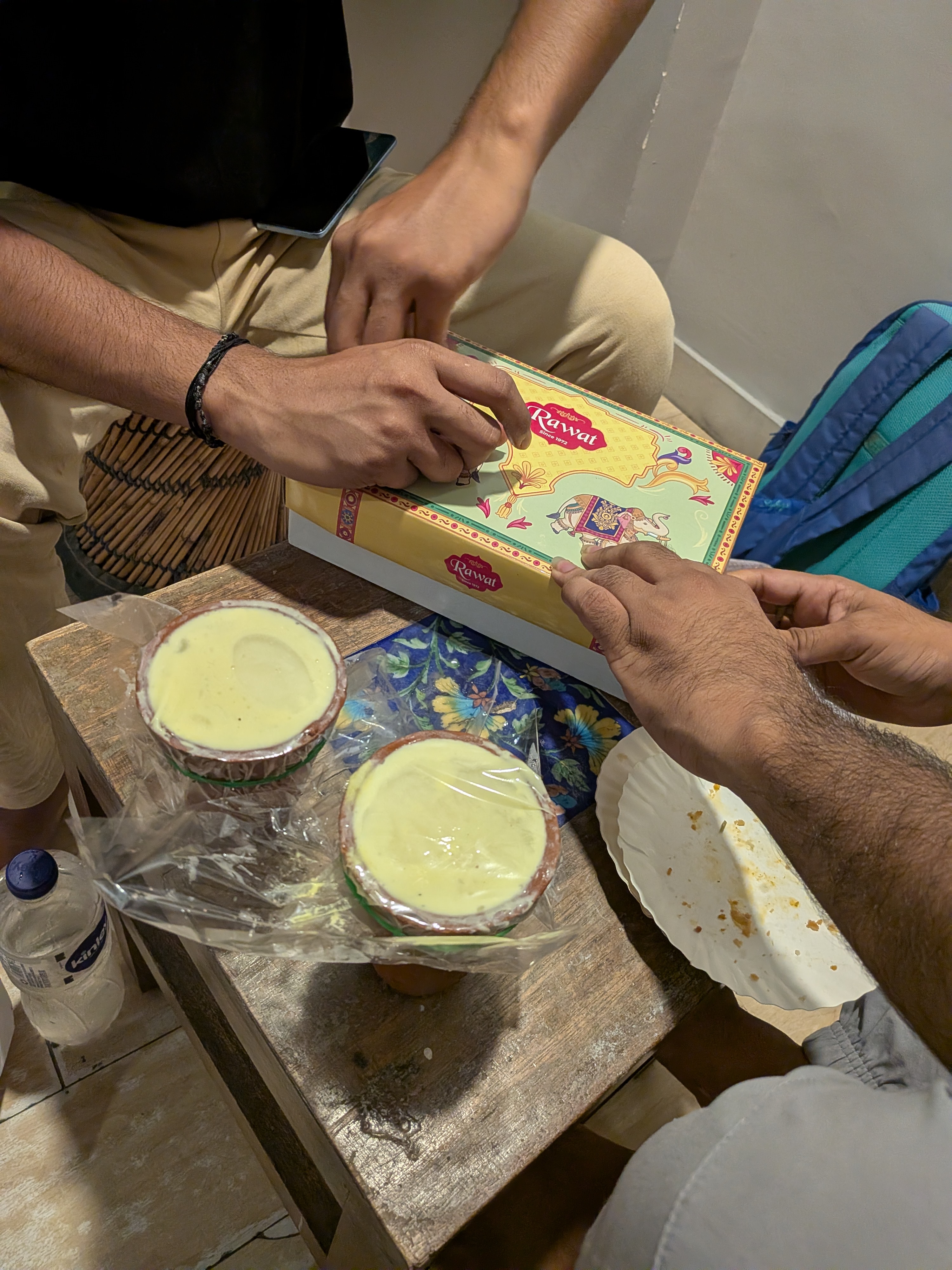
After waking up on 21st afternoon, before any of the Jaipur sightseeing, we ordered lunch from Rawat Mishthan Bhandar on Swiggy — Dal Bati Churma, pyaaz kachori and lassi. Classic Jaipur, delivered straight to the hotel. It was genuinely good and set the tone for the food that followed throughout the trip.
The next morning (22nd August), we went to the airport to pick up Siva Sai, our fifth friend. And then we were five. The full group was finally together.
22nd August — The Forts of Jaipur
After picking up Siva Sai and having lunch, we started our fort tour around mid-afternoon. First stop: Amber Fort.
Amber Fort
Amber Fort was once the capital of the Kachhwaha rulers, developed over centuries under Raja Man Singh and his successors. The fort complex contains courtyards, royal quarters, temples, gardens and the famous Sheesh Mahal.
Standing inside, you can understand why Rajasthan is so strongly associated with its royal history.
We took a guide here — something we did at most major attractions during the trip. Guides usually charged between ₹100 and ₹500, and having someone explain the stories made the places considerably more interesting.
After Amber Fort, we went shopping at Rajputana Textiles, picked up some traditional cloth items, and then headed toward Jaigarh Fort.
Jaigarh Fort and the Giant Cannon
Jaigarh sits on Cheel ka Teela — the "Hill of Eagles" — directly above Amber. Its military character is very different from the palace-like atmosphere below.
And then we saw the thing most people associate with Jaigarh — the enormous Jaivana cannon. The world's largest cannon on wheels. It's hard to appreciate the scale of it until you're standing next to it.
Nahargarh Fort
Nahargarh sits high in the Aravalli Hills overlooking Jaipur. The fort was constructed in 1734 during the reign of Jai Singh and later expanded. Its location made it part of Jaipur's defensive ring, while the Madhavendra Bhawan palace within served as a royal retreat.
Jal Mahal
After Nahargarh, we drove down to Jal Mahal — the Water Palace sitting in the middle of Man Sagar Lake. It has been closed for around eight years now, so we could only admire it and take pictures from the road outside. Even from a distance, a palace floating in the middle of a lake looks like something out of a story.
City Palace
After Jal Mahal, we visited City Palace — the active administrative and ceremonial heart of Jaipur's royal history. The complex combines Rajput and Mughal architectural influences across multiple courtyards, museums and palaces.
Hawa Mahal
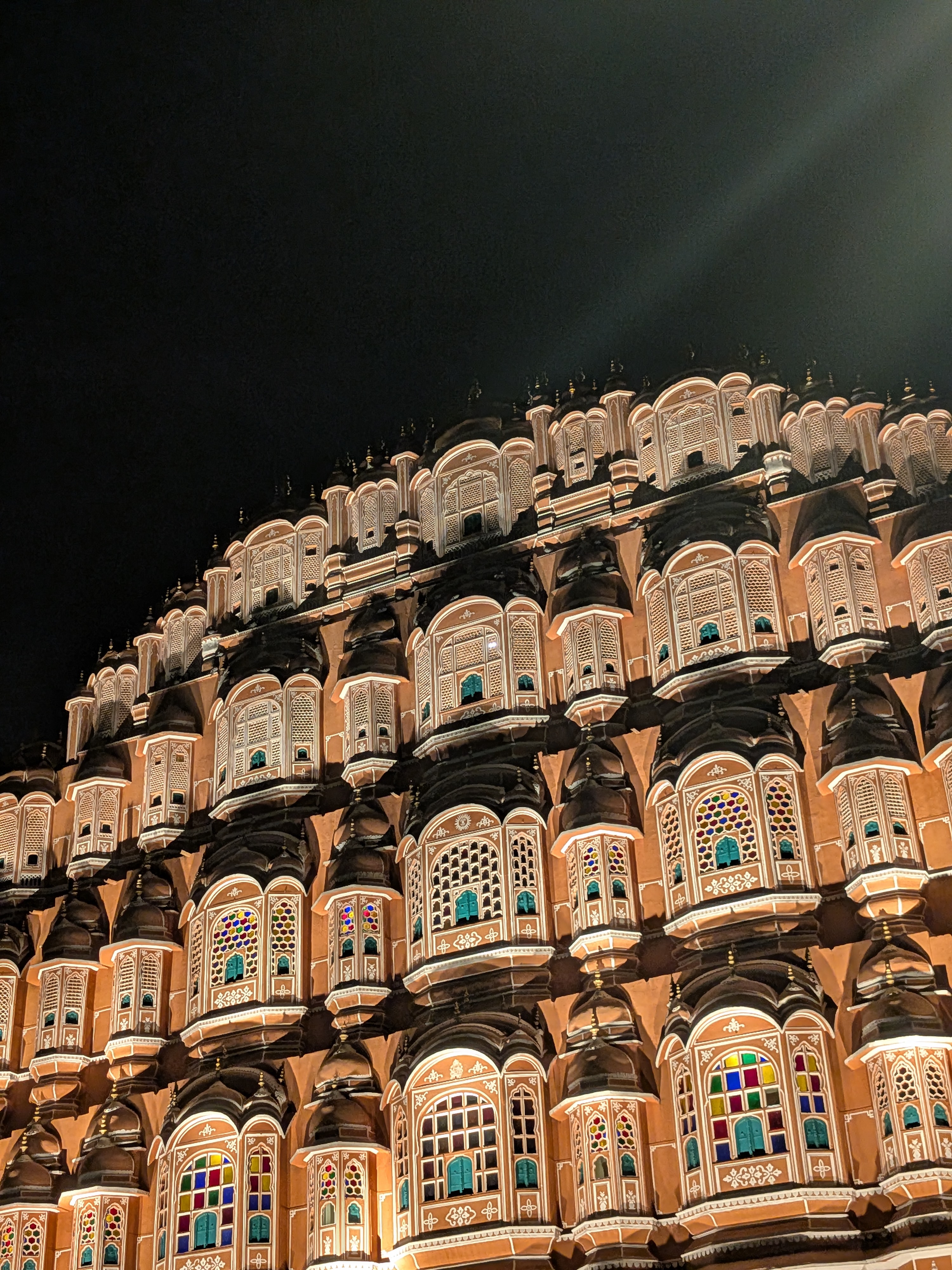
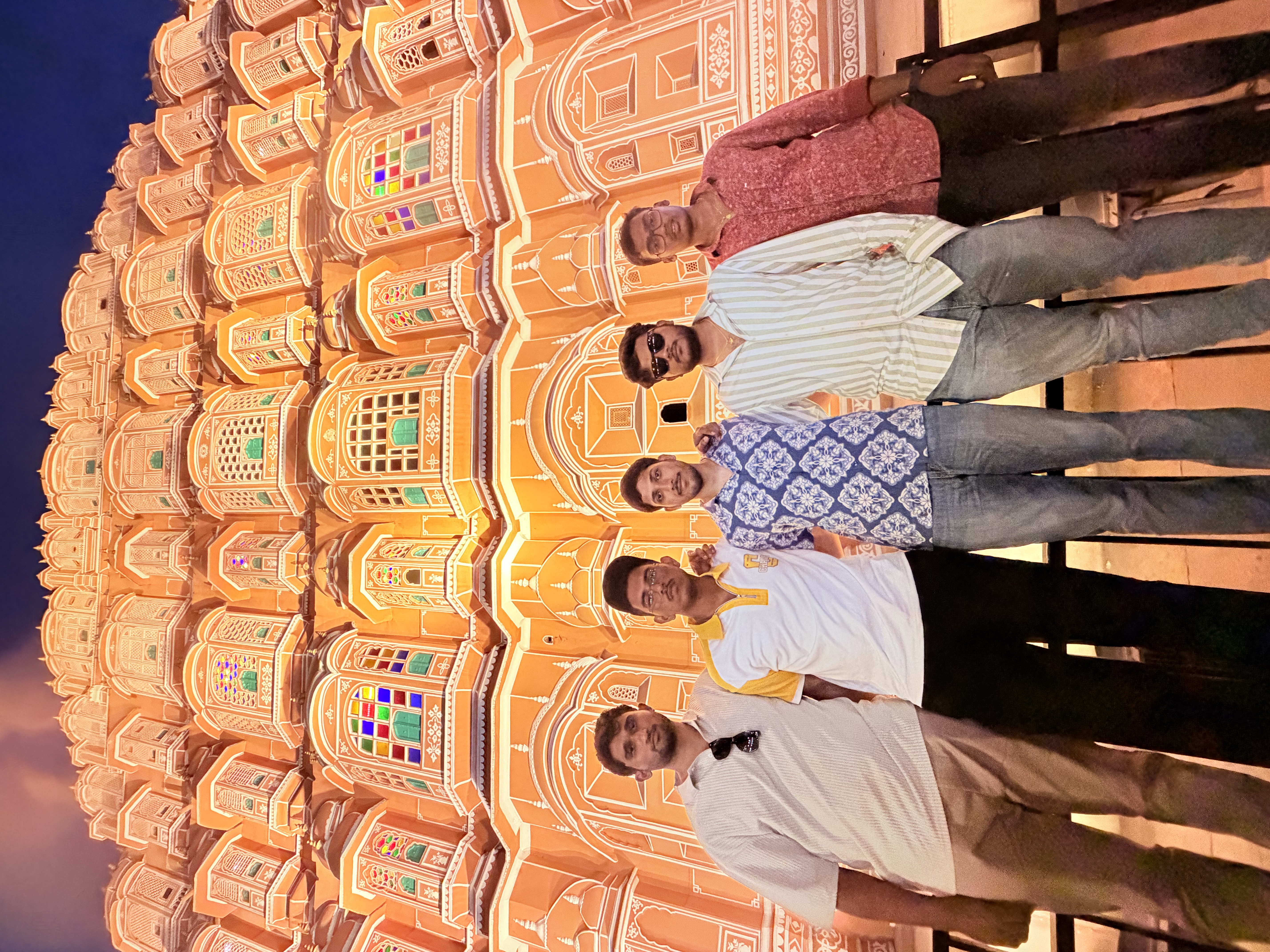
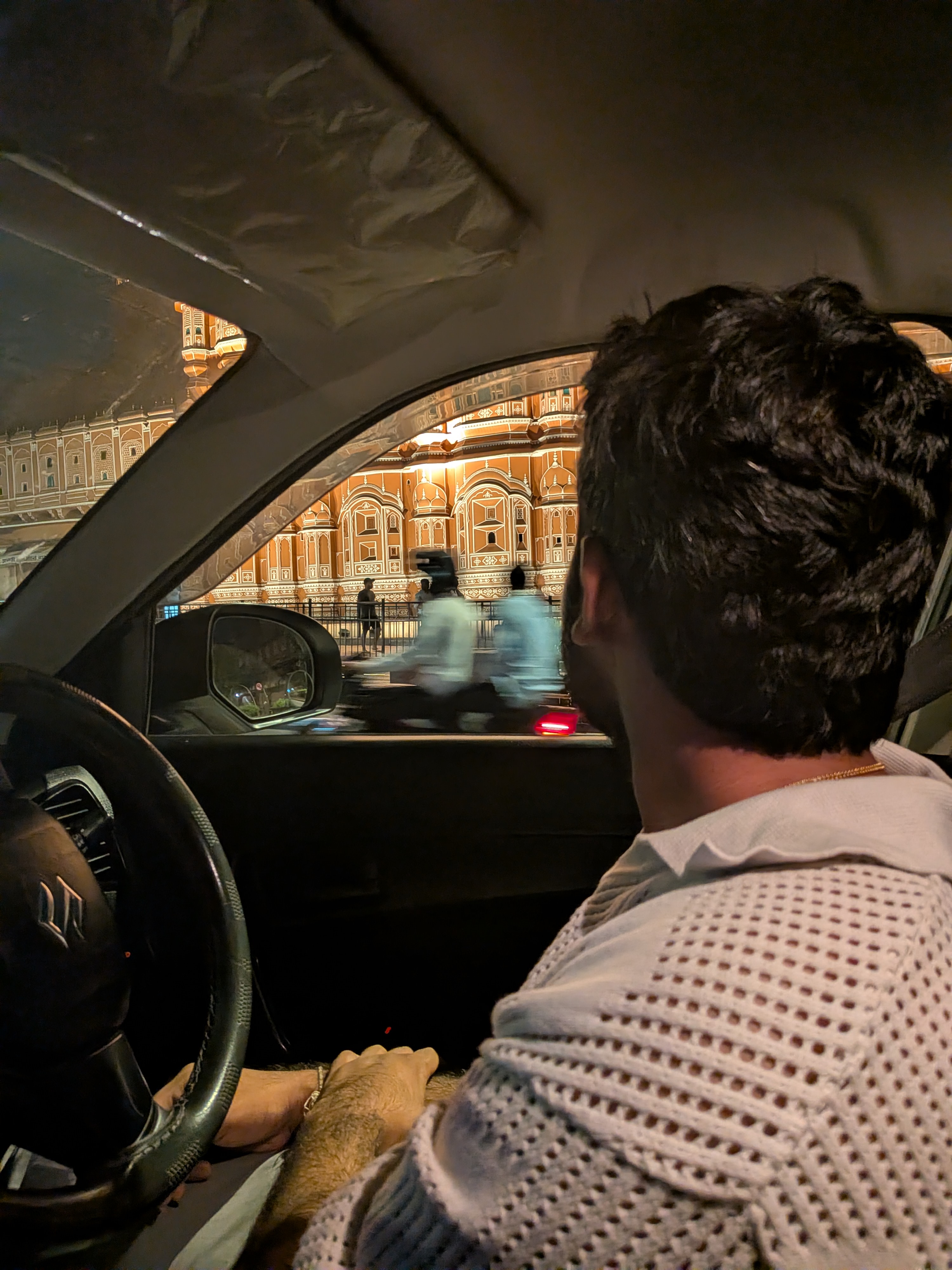
After City Palace, we walked over to Hawa Mahal. The 953-windowed facade is one of those things that photographs well but looks even more impressive in person. We got some group pictures outside before heading to Spice Court for dinner.
After a full day of forts, palaces and havelis, we packed up and got back into the Brezza. Next destination: Udaipur.
Udaipur: The City of Lakes
We reached Udaipur at around 6 AM on 23rd August after the overnight drive from Jaipur. After checking into Kumani Hotel, we rested and started our day around 11 AM.
Udaipur immediately felt different from Jaipur. Jaipur had given us forts, walls and the energy of a historic city. Udaipur had lakes, hills, palaces and a much calmer atmosphere. And out of the three cities, Udaipur became my favourite.
Khamma Ghani
Our first major stop was Khamma Ghani, where we stopped for food. After that, we headed toward the lake and went boating — a welcome change after so many hours in the car.
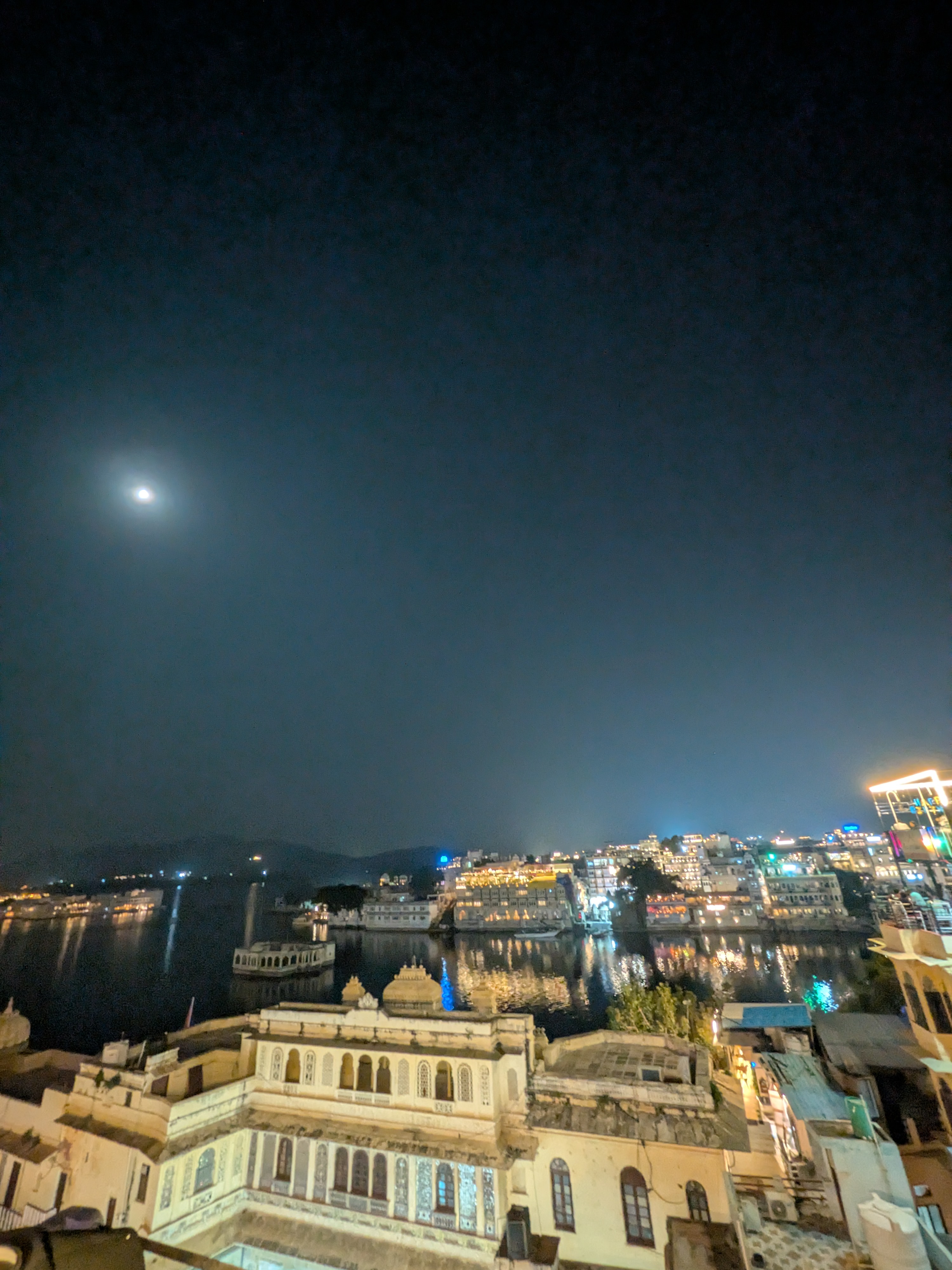
Fateh Sagar Lake
Fateh Sagar Lake was originally constructed in 1678 and later rebuilt by Maharana Fateh Singh. The lake is surrounded by hills and contains three islands, including the island housing the Udaipur Solar Observatory.
For us, the historical significance came second. Simply sitting on a boat on a calm lake after so much driving felt great.
Baliyan Ki Haveli and Monsoon Palace
From Khamma Ghani, we went to Baliyan Ki Haveli and then continued toward Sajjangarh — the Monsoon Palace on the Bansdara Hills. What was originally planned as an astronomical centre became one of the best viewpoints over Udaipur.
Ambrai Ghat
Later, we went to Ambrai Ghat. One of those places where you don't need an activity — you just sit there, look across the water and take in Udaipur. After all the forts and monuments, it was nice to simply slow down.
Udaipur City Palace
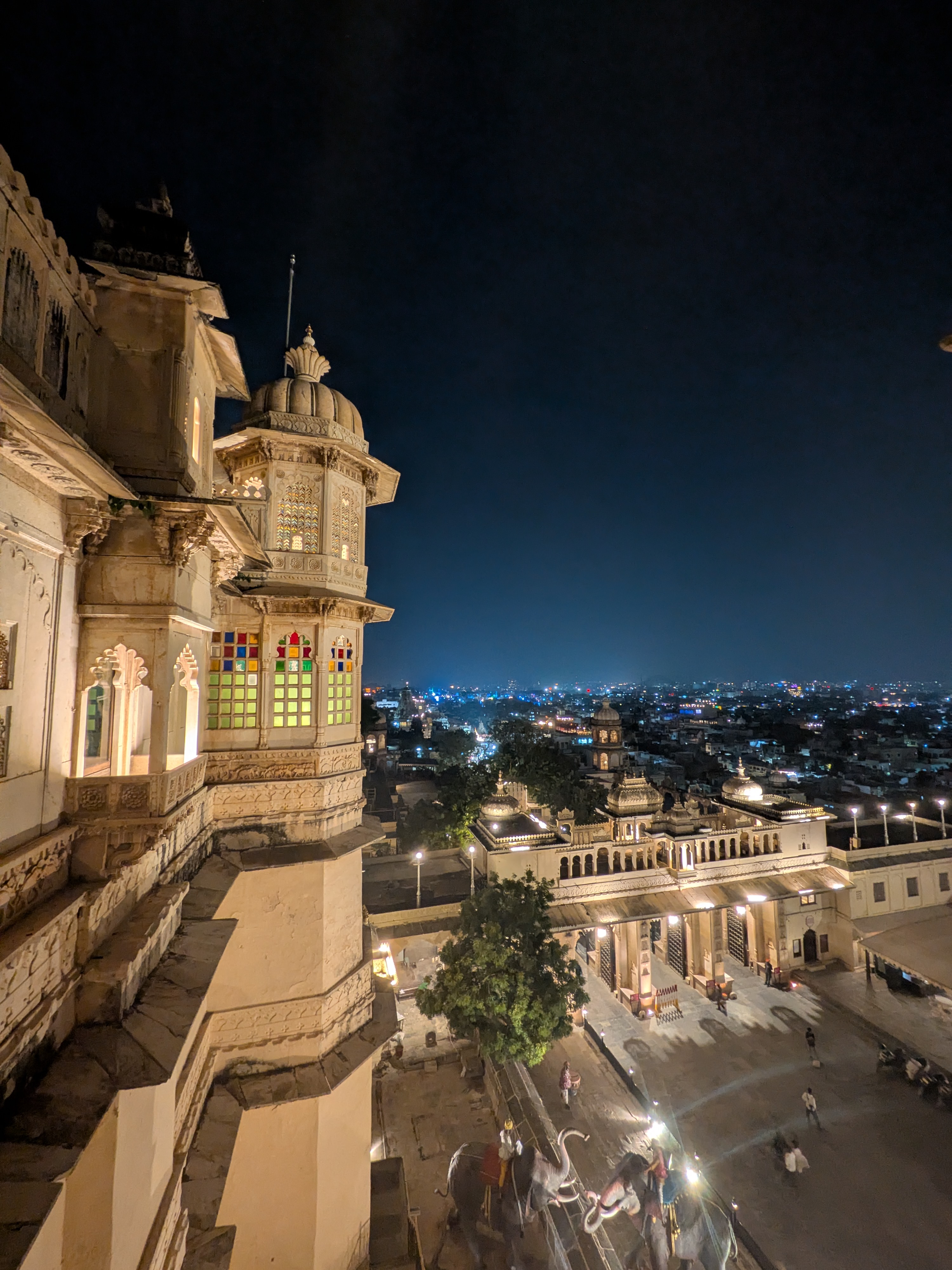
Our final major stop was Udaipur City Palace — a massive complex developed by successive rulers of Mewar over nearly four centuries. Courtyards, terraces, corridors, gardens, and the famous Mor Chowk with its peacock mosaics.
By the time we finished, we were exhausted. We returned to the hotel, packed up and prepared for the next long drive. The next destination: Jaisalmer.
On the Road to Jaisalmer — 24th August
Statue of Belief
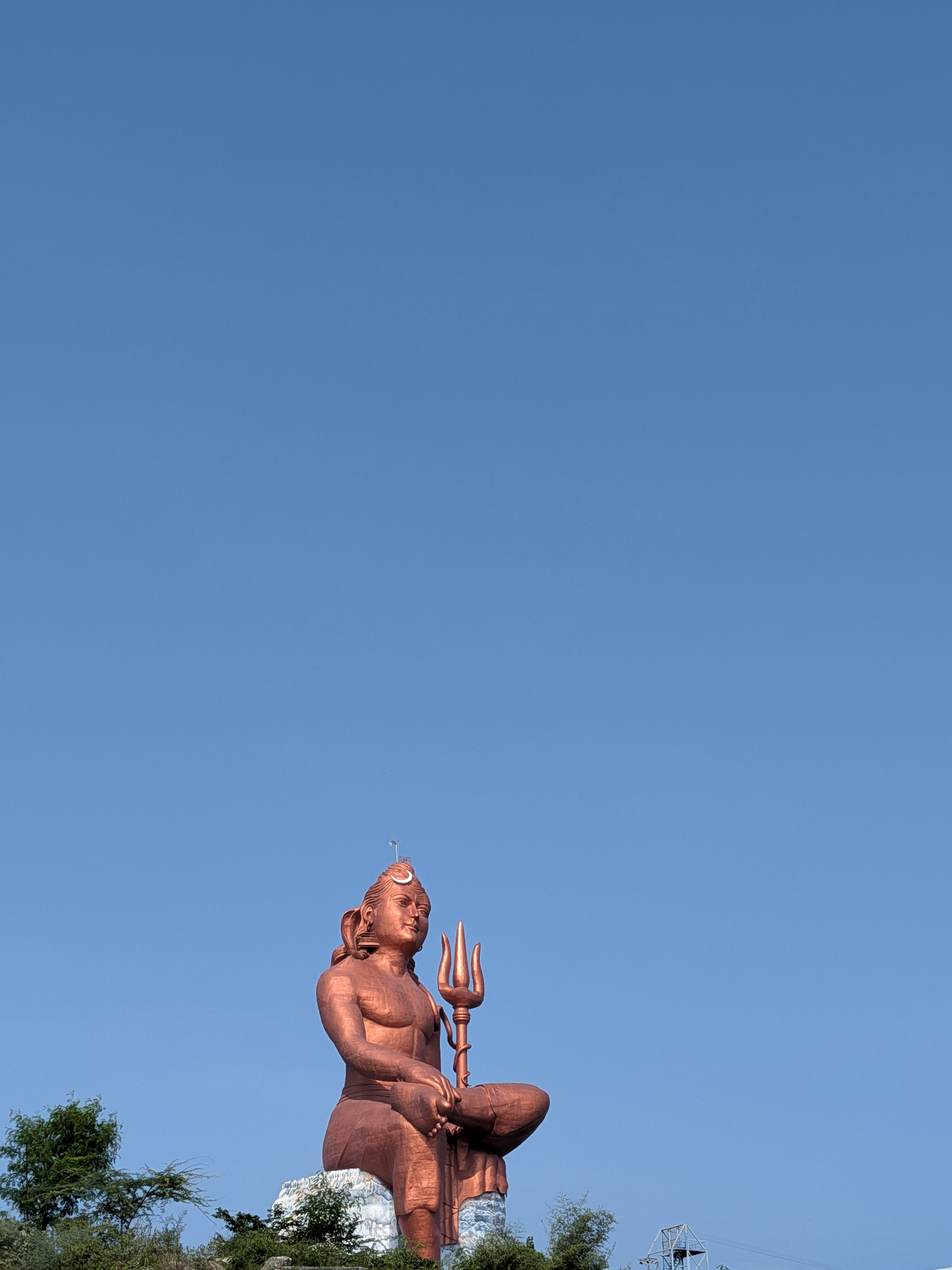
We started early on the morning of 24th August for the long drive to Jaisalmer. On the way, we passed through Nathdwara and stopped at the Statue of Belief — the massive 369-foot statue of Lord Shiva. We were passing through in the morning and the timings work out (10 AM to 10 PM), so we stopped for a bit. A striking sight rising up from the Rajasthan landscape.
A Village Stop on the Way
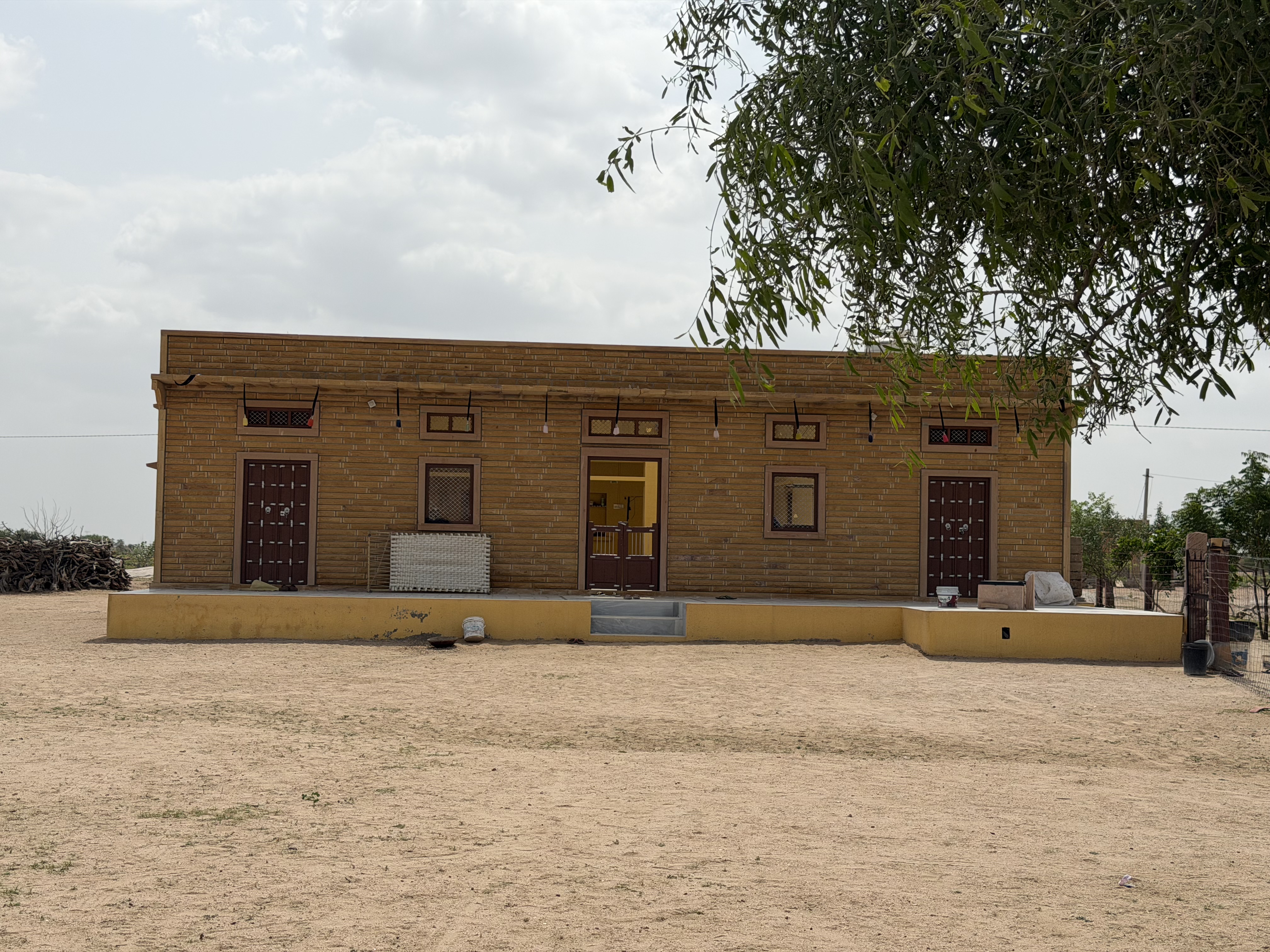
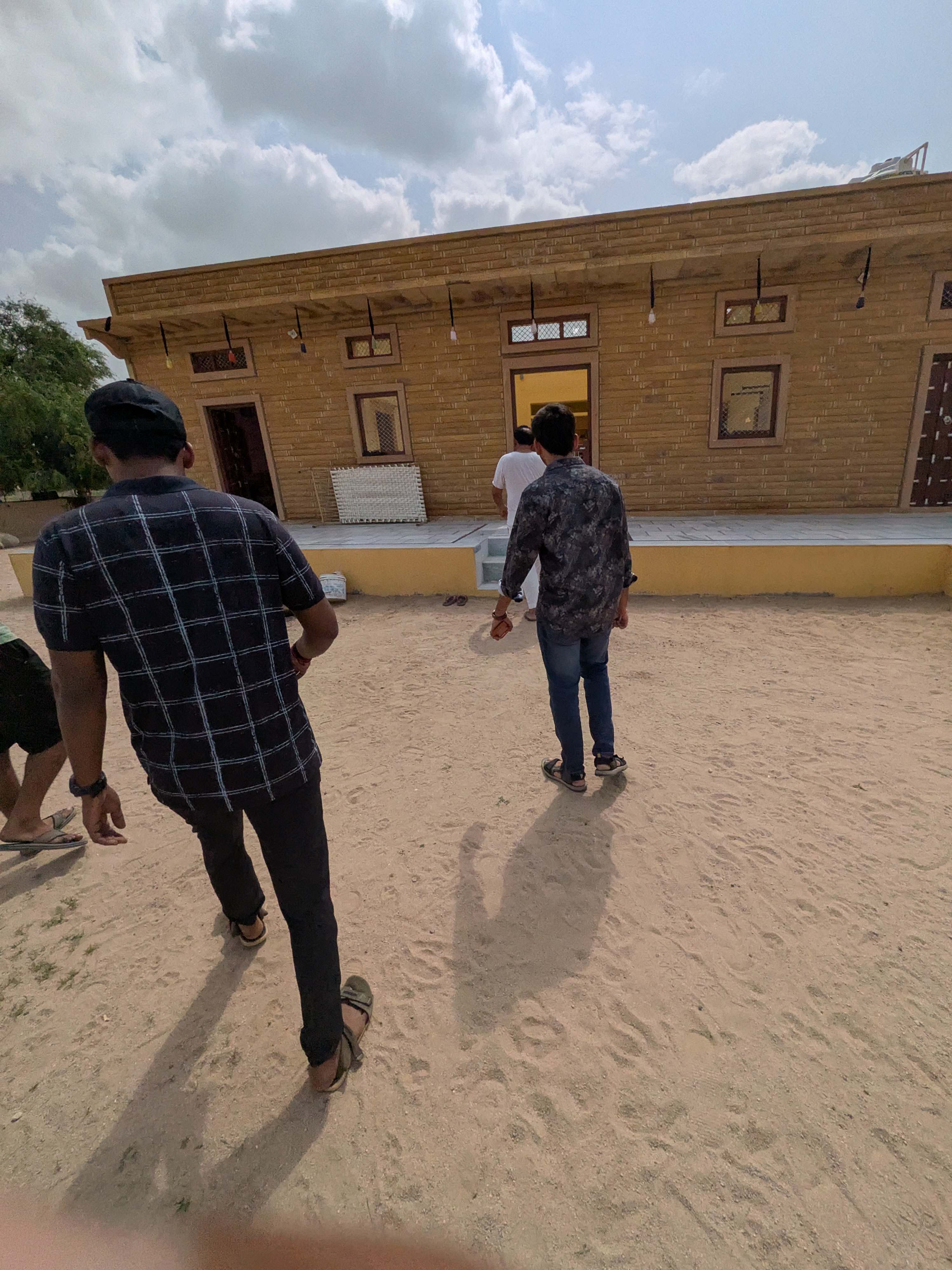
Further along the drive, we stopped at a village and walked into a local house. The family was welcoming — one of those spontaneous stops that wasn't on any itinerary but ended up being one of the more memorable moments of the trip. Seeing how people actually live in the Rajasthan countryside, away from the forts and tourist circuits, is something else entirely.
Jaisalmer: The Golden City
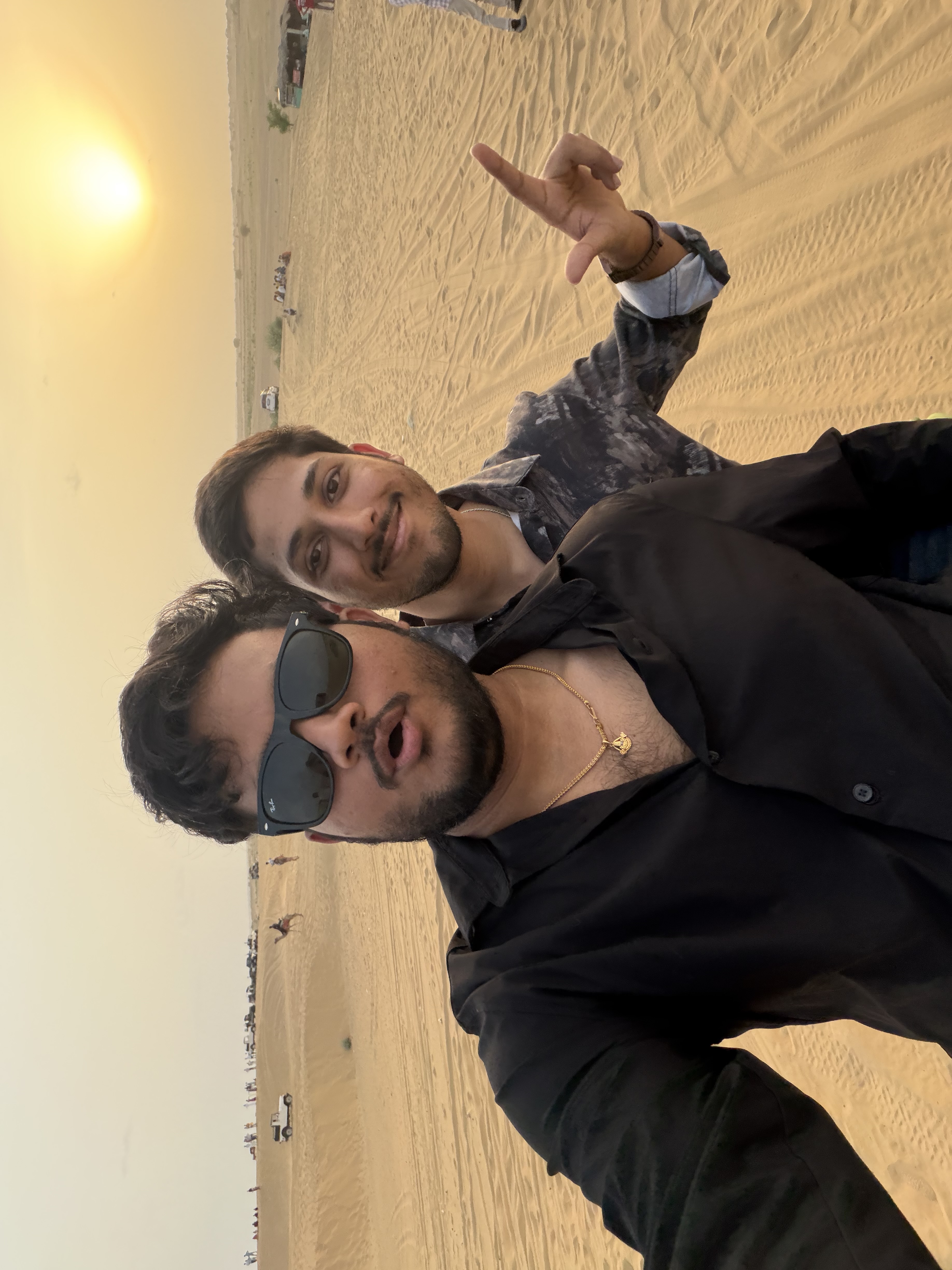
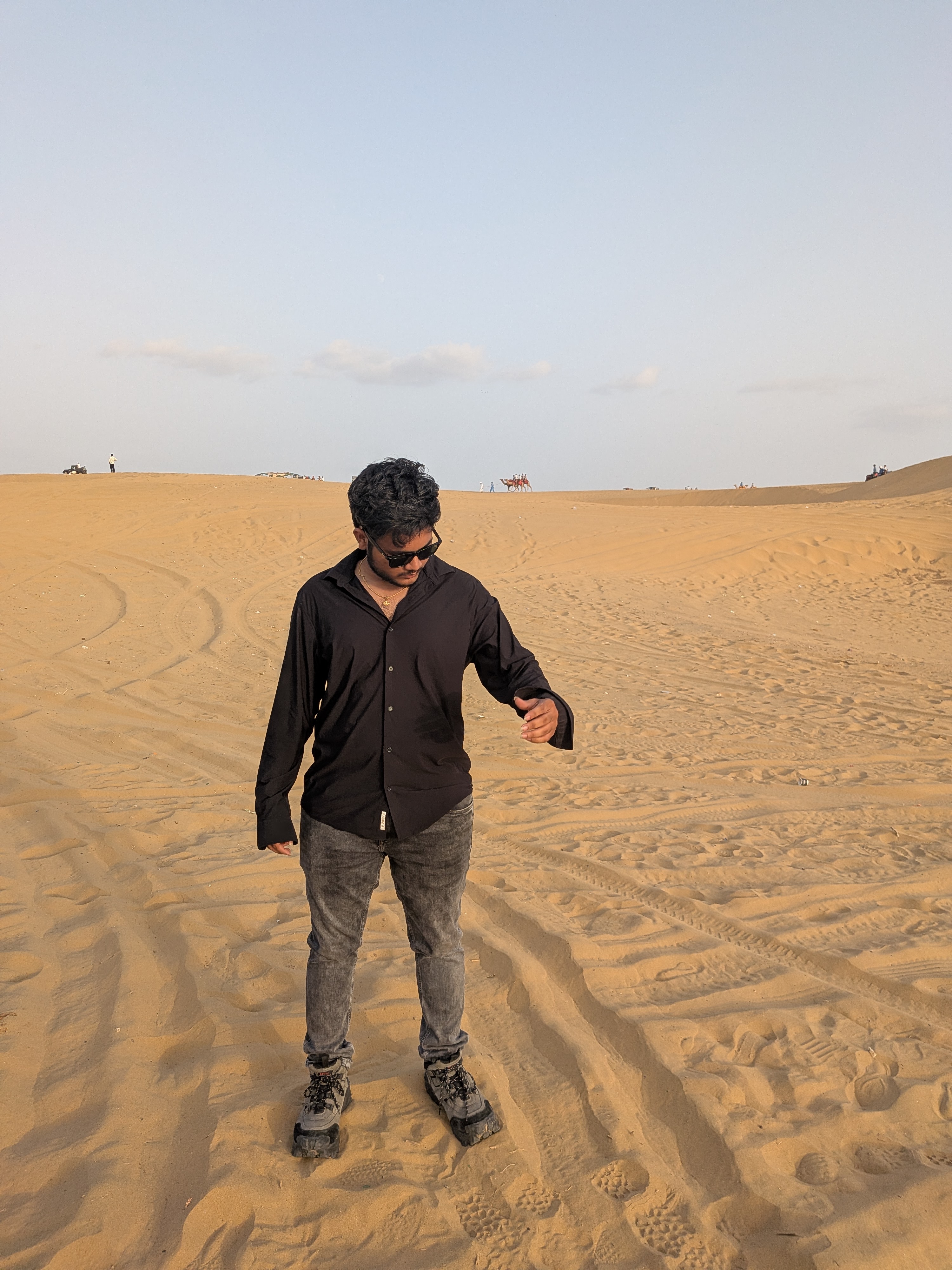
We reached Jaisalmer in the evening on 24th August and checked into Marina Royal Desert Camp. After settling in, we headed toward Sam Sand Dunes for the desert experience we'd been building toward the whole trip.
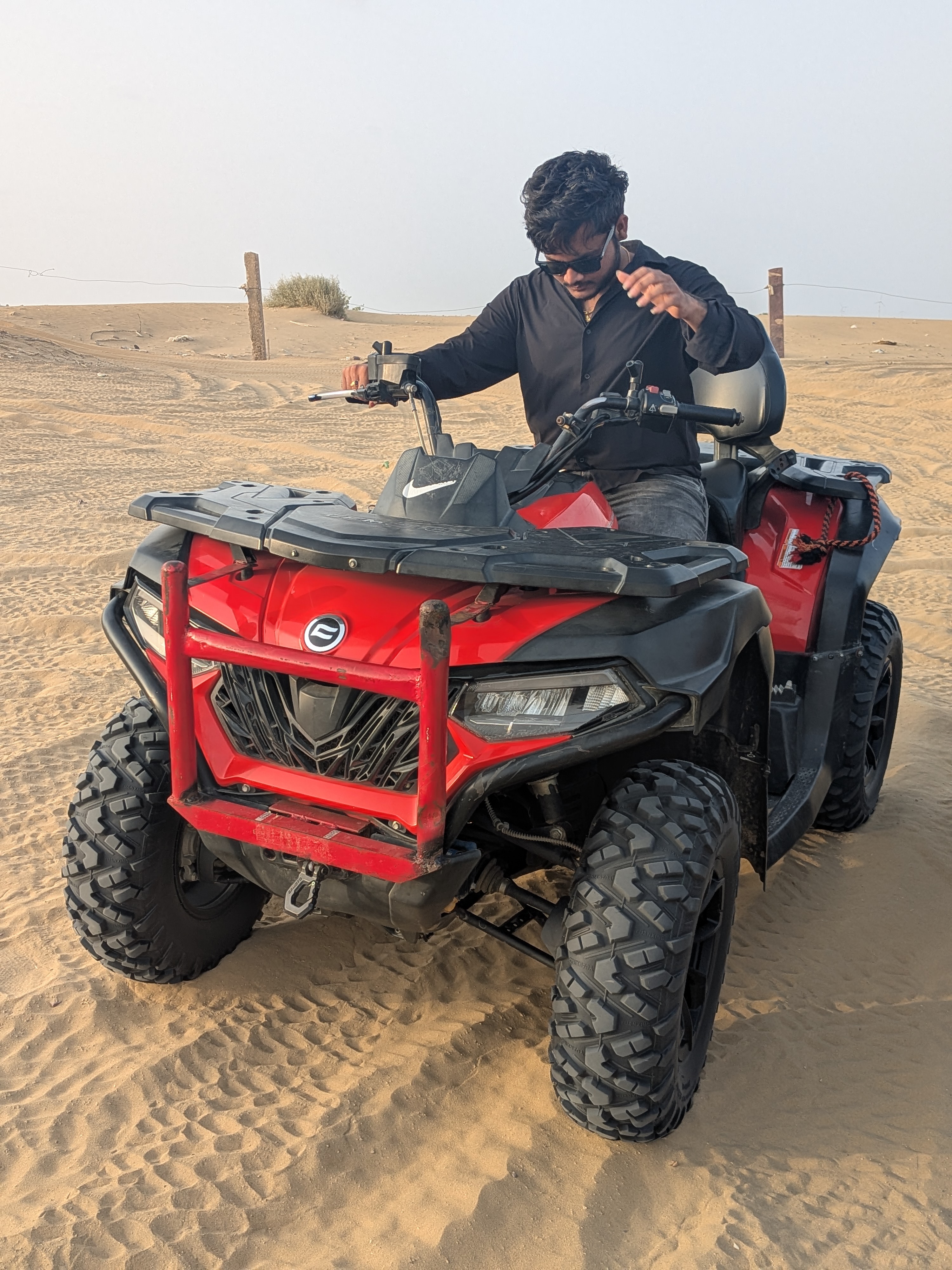
The camp and all desert activities — camel riding, ATV, and overnight desert camping — were booked at ₹1,300 per person (off-season rates). The ATV ride was separate at ₹700 per person. For the camel ride, tipping the handler is customary and expected.
- ATV bike riding across the dunes
- Camel riding at Sam Sand Dunes
- Overnight desert camping
The ATV Ride
The ATV ride was my favourite activity of the entire trip. After spending so much time driving a car on highways, getting onto an ATV and flying across the sand was exactly the kind of change we needed. The camel ride was a completely different experience — slower, quieter, more traditional. Then we returned to the camp and spent the night in the desert.
The next morning (25th August), we started exploring Jaisalmer itself.
Kuldhara: The Abandoned Village
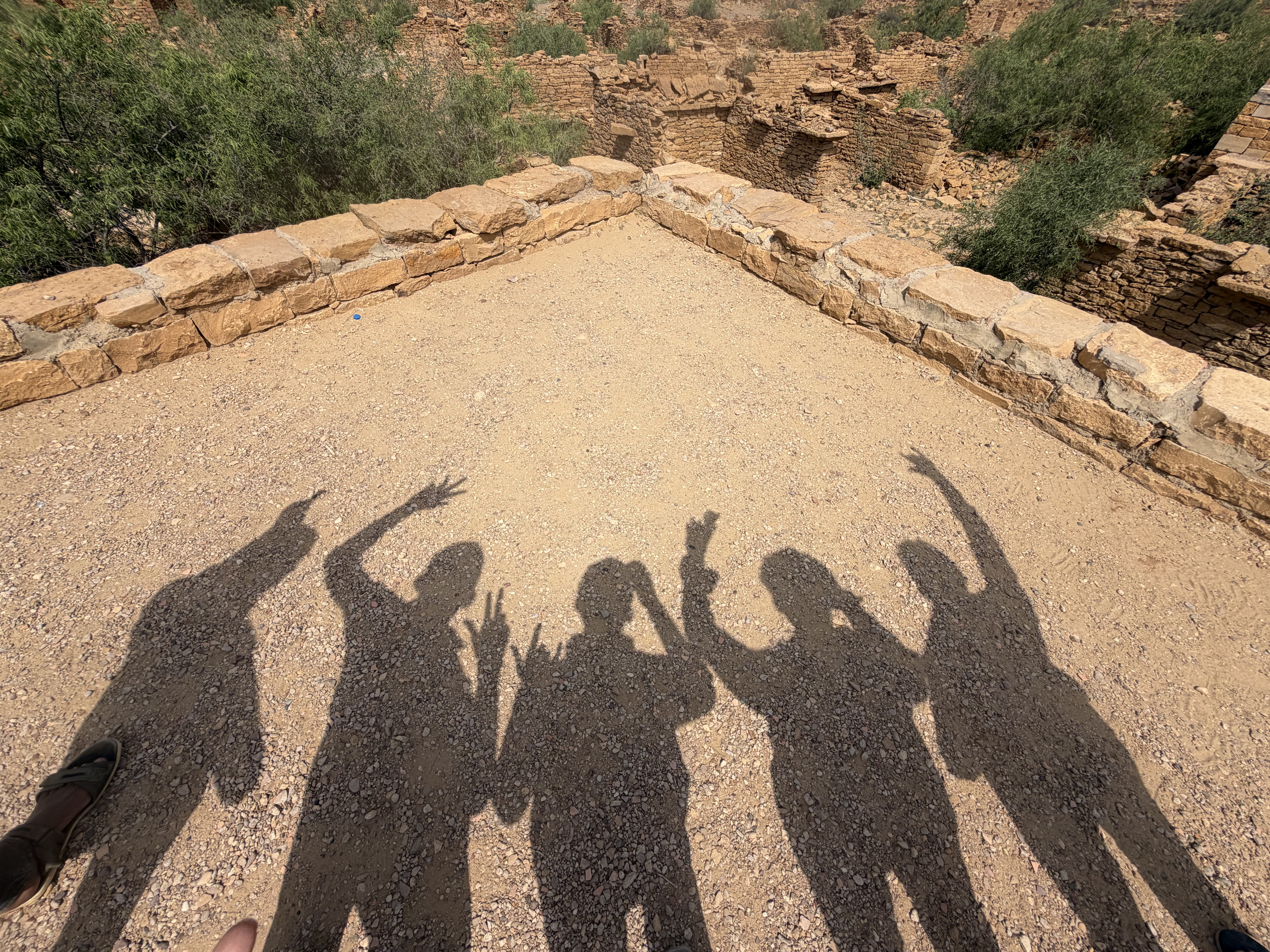
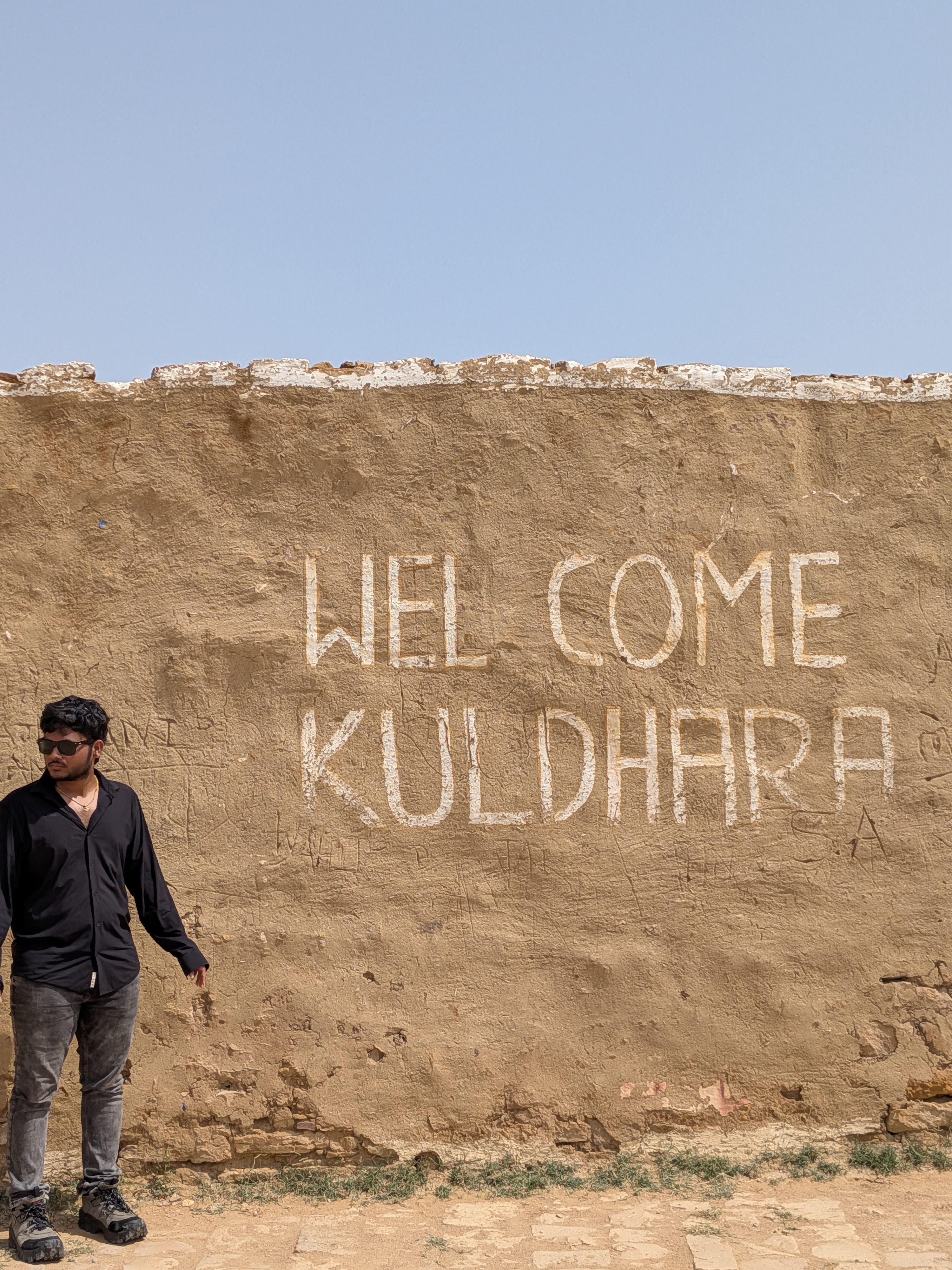
Our first stop was Kuldhara. Established in 1291 by Paliwal Brahmins, it was once a prosperous settlement in the middle of the desert — abandoned in the 19th century, leaving behind ruined homes and one of Rajasthan's most persistent legends.
Walking through the empty streets was very different from the grand palaces we'd seen in Jaipur and Udaipur.
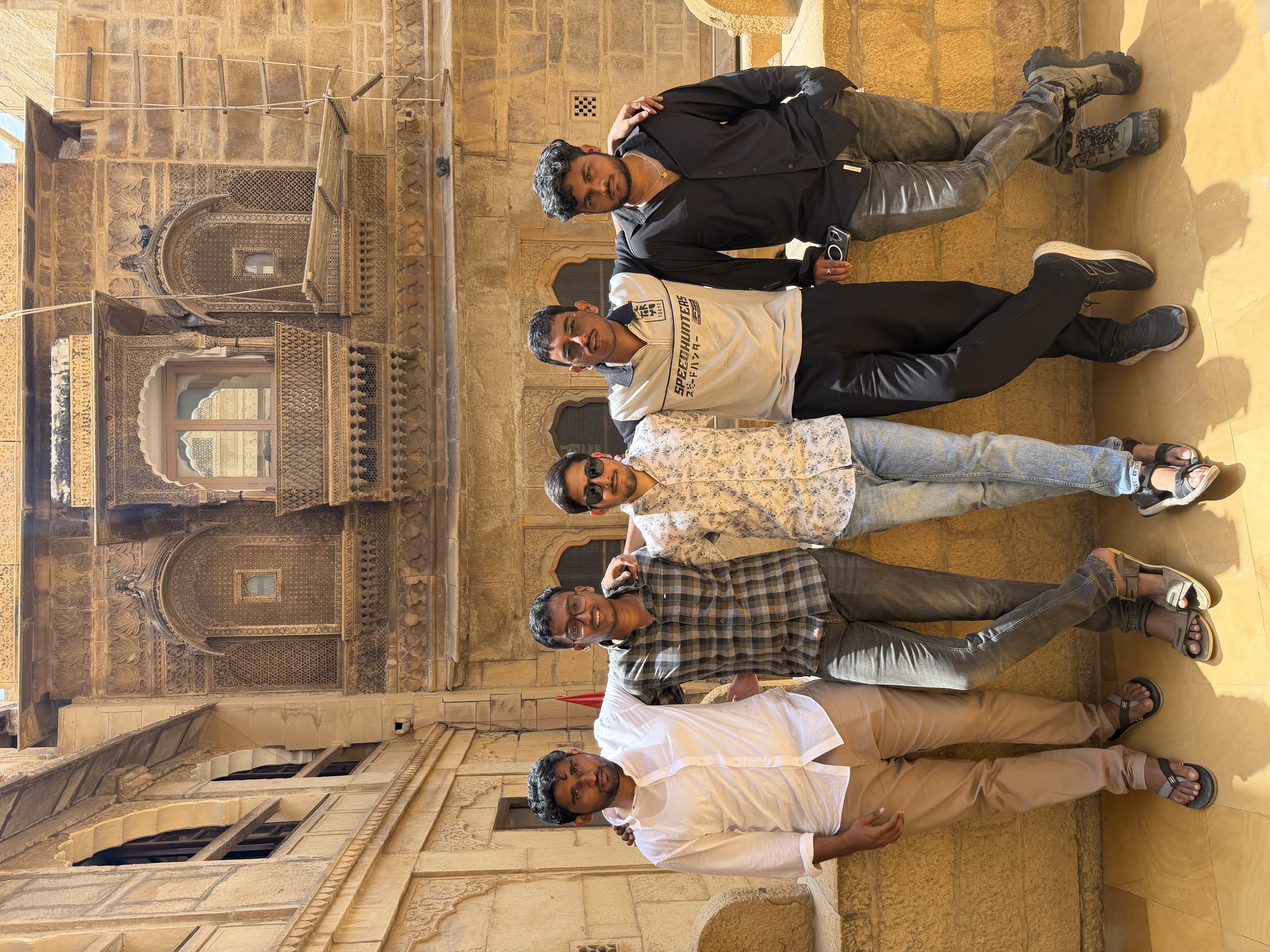
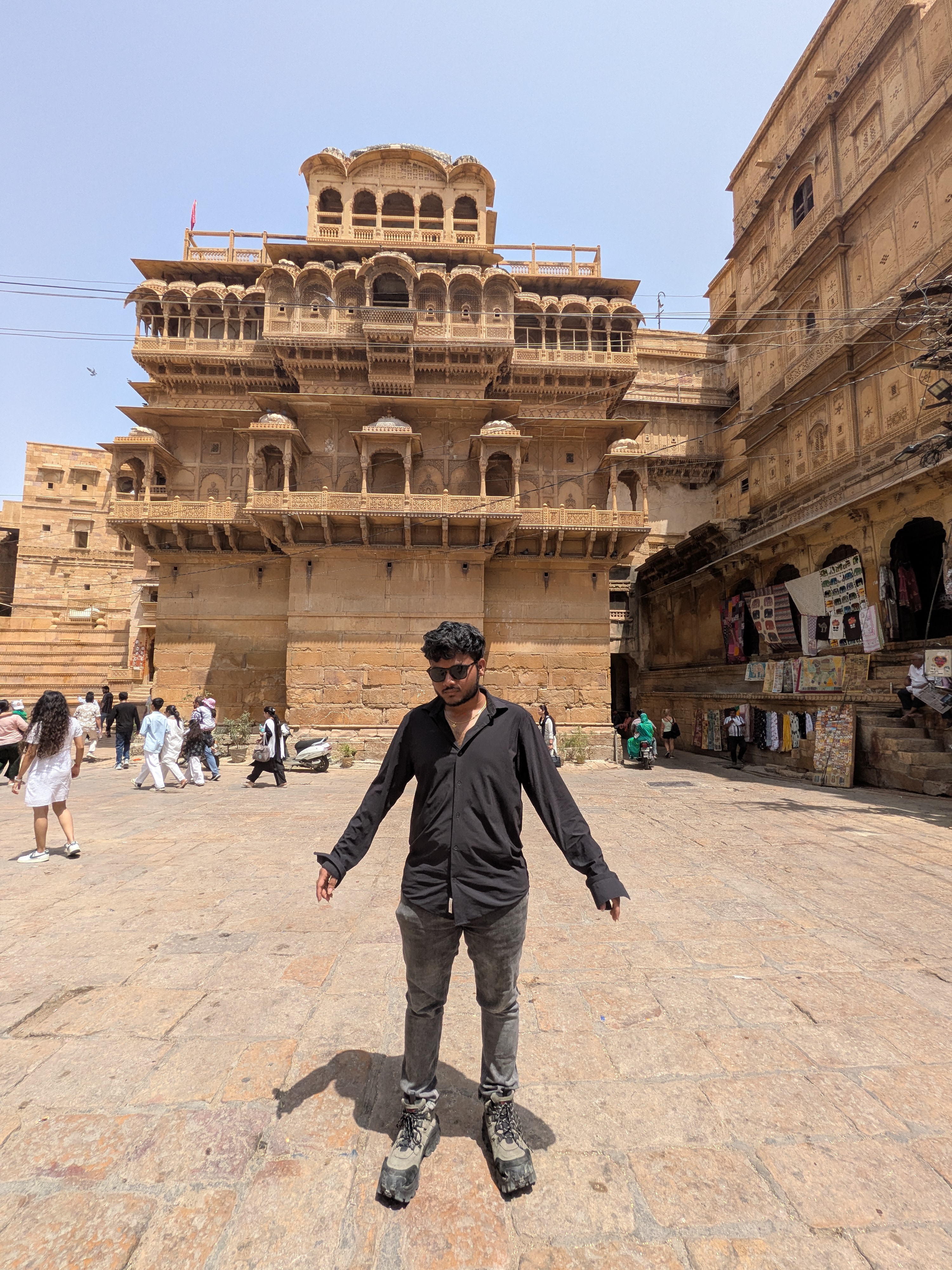
Jaisalmer Fort: A Living Fort
Next came Jaisalmer Fort — Sonar Qila, the Golden Fort. Built by Rawal Jaisal in 1156 and unlike any other fort we visited.
People still live inside it. Homes, shops, hotels, temples and havelis within the fort walls. It remains a living part of Jaisalmer rather than just a preserved monument.
Patwon Ki Haveli
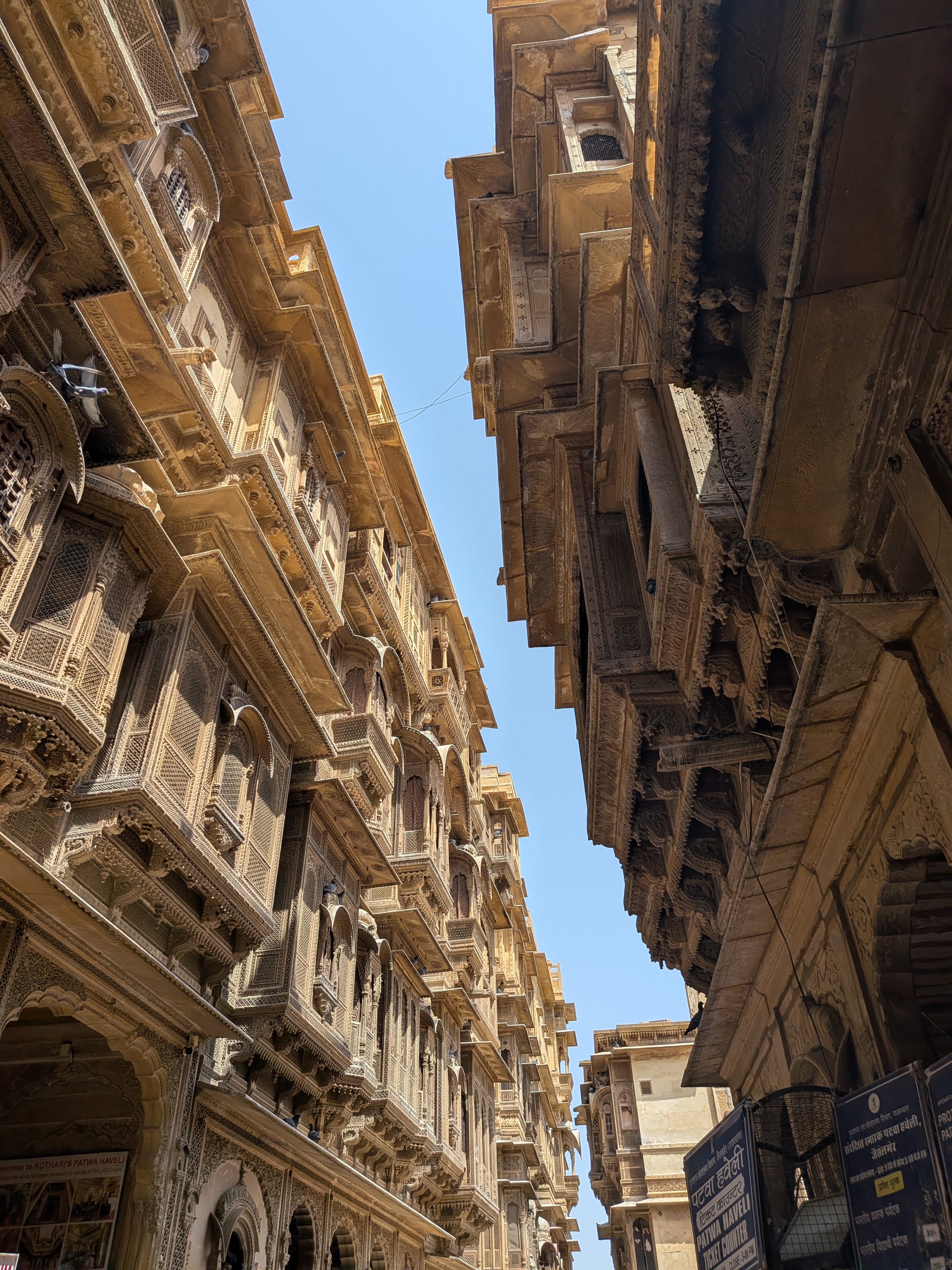
Next, we visited Patwon Ki Haveli — the largest and most elaborately carved haveli in Jaisalmer. The sandstone facade, detailed carvings and paintings show the extraordinary wealth of the merchant class here.
After the massive scale of the forts, the havelis showed us another side of Rajasthan. Not royal palaces — merchant mansions.
Nathmal Ki Haveli
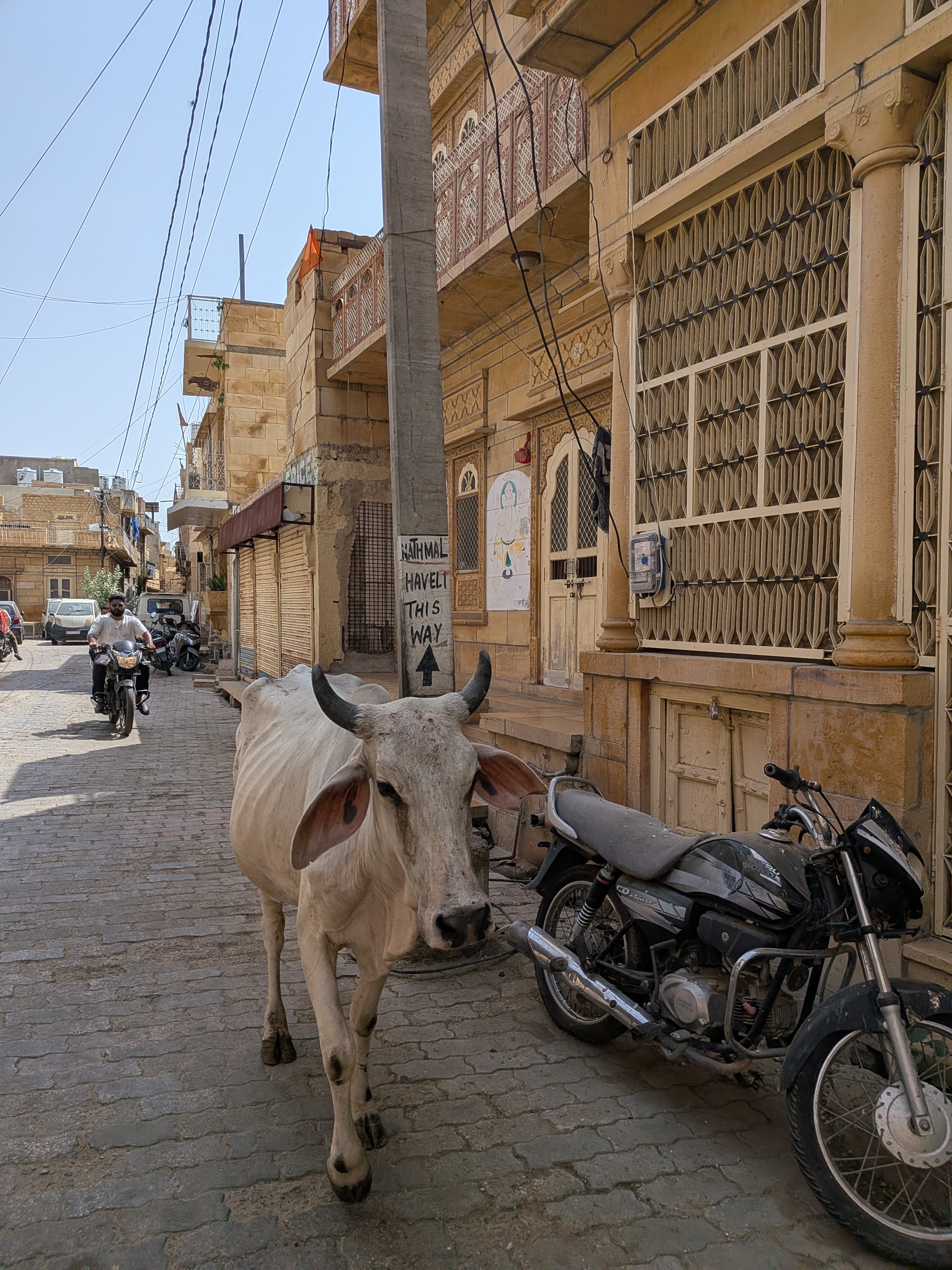
Then came Nathmal Ki Haveli. Two architect brothers built it from opposite sides simultaneously — the result is impressive symmetry with subtle differences, and sandstone carvings that include, somehow, depictions of early motor cars.
Gadisar Lake
Our final stop was Gadisar Lake. Built in the 14th century as Jaisalmer's only water source, with temples, shrines and ghats added over centuries. A beautiful lake with a surprisingly practical origin story.
The Rajasthan Hair Crisis
There was another historical event of the trip that deserves to be documented.
Our hair gave up.
Throughout Rajasthan, we somehow managed to go without a proper head bath. Between the dry climate, dust, long drives and desert sand, our hair became unbelievably dry. By the end of Jaisalmer, it felt like Rajasthan had personally declared war on our scalp moisture.
So here's one piece of travel advice that no guidebook gave us: if you're doing a Rajasthan road trip, carry your shampoo and actually use it. 😂
25th August Evening — The Drive Home
At around 5 PM on 25th August, we finally left Jaisalmer. One thing left: drive back to Chandigarh.
I drove first. Somewhere along the way we had our third police encounter — this time for doing around 100 km/h in an 80 km/h zone. We were stopped, given a challan, and ₹500 was paid unofficially.
After that I handed over to one of the others. We stopped for dinner at around 7 PM, then I took over again. I drove 70 km on normal roads, then 312 km straight on the highway, then another 30 km before handing over to Pranay for the final stretch into Chandigarh.
We eventually reached Chandigarh around 6 AM on 26th August. And just like that, the Rajasthan road trip was over.
The Numbers
Jaipur vs Udaipur vs Jaisalmer
After experiencing all three, each city felt like a completely different version of Rajasthan.
🏰 Jaipur
Best for: Forts, royal history, architecture and shopping.
Amber, Jaigarh, Nahargarh, City Palace and Hawa Mahal make Jaipur feel like one enormous history lesson.
🌊 Udaipur
Best for: Lakes, sunsets, palaces and relaxing views.
This was my favourite city of the trip.
🏜️ Jaisalmer
Best for: Desert, adventure, camping and unique architecture.
The ATV ride was my favourite activity, and the desert camping made Jaisalmer the most adventurous part of the trip.
Was the Rajasthan Road Trip Worth It?
100% yes.
Rajasthan wasn't one experience. It was three completely different worlds. Jaipur was about the power and grandeur of the Rajput kingdoms. Udaipur was about lakes, hills, palaces and slower evenings. Jaisalmer was about the desert, old trading wealth, living forts and adventure.
And the best part was that we didn't just fly between these places. We drove.
- We spent hours on highways.
- We stopped in random villages and walked into someone's home.
- We worked from the car on day one.
- We dealt with cows in the middle of highways.
- We got stopped by the police three times.
- We ate Dal Bati Churma, pyaaz kachori and lassi in Jaipur.
- We took guides at forts and actually learned something.
- We rode ATVs through the Thar Desert.
- We rode camels at Sam Sand Dunes.
- We slept in the desert under the stars.
- And somewhere along the way, our hair completely stopped cooperating.
That's what made the trip memorable. Because when you travel by road, the destination is only half the story. The other half is everything that happens between where you start and where you finally come back home.
And after 2,500 kilometres, three cities, three police encounters, one wrong U-turn and a ridiculous amount of driving, I can confidently say: Rajasthan was absolutely worth the trip.